
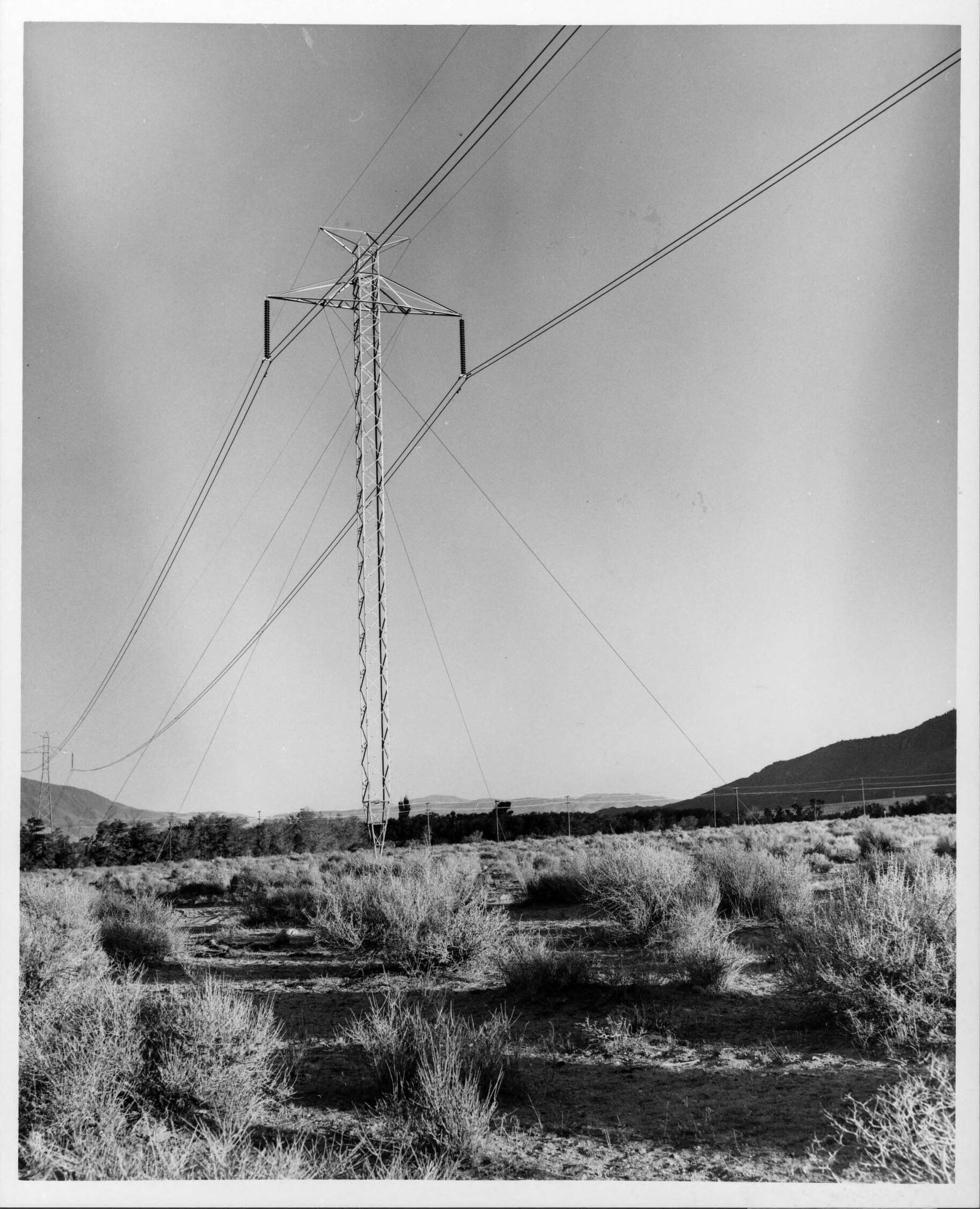
Pacific Intertie circa 1975. Courtesy of Southern California Edison collection of negatives and photographs, The Huntington Library, San Marino, California
The story of regional interties in the U.S. is also the story of our modern grid.
Nearly one hundred years ago, the construction of a 44-mile, 220 kV transmission line marked the beginning of a power pool linking three utilities in Pennsylvania and New Jersey. Now known as the PJM Interconnection, this same power pool now stretches from New Jersey to Chicago and serves roughly 20% of U.S. electrical load.
40 years later, the construction of the Pacific Intertie ambitiously tied together the hydroelectric resources under the Bonneville Power Administration in the Pacific Northwest with the urban and agricultural centers of California. California’s generation at the time was primarily characterized by thermal power plants that struggled to meet demand in the summer; at the same time, abundant hydro resources of the Pacific Northwest were producing max output—making a connection between the two regions beneficial on multiple levels.
For decades, utilities, grid operators, and public officials have understood the variety of reliability, efficiency, and complementarity benefits that a well interconnected grid brings. These benefits are just as relevant in today’s heatwaves and data center demand crunches as they were during the rise of air conditioning in the 60s and 70s or during the isolated and redundant utility models of the early 20th century.
Grid Strategies’ latest report, “Making Connections: A history of the regional electrical lines that shaped the U.S. grid” takes a deeper look at the evolving regulatory perspectives on interties and grid integration during the 20th century, demonstrating how the benefits of grid interconnection, as understood by public officials at the time, can inform our current challenges.