
The North American Electric Reliability Corporation (NERC)’s Summer Reliability Assessments (SRAs) evaluate potential reliability concerns for the upcoming summer. In its 2026 SRA, NERC projected all areas to have adequate resources for normal summer conditions, but identified two regions in the U.S.—New England and Northwest—at “elevated risk” in meeting once-in-a-decade extreme load conditions.
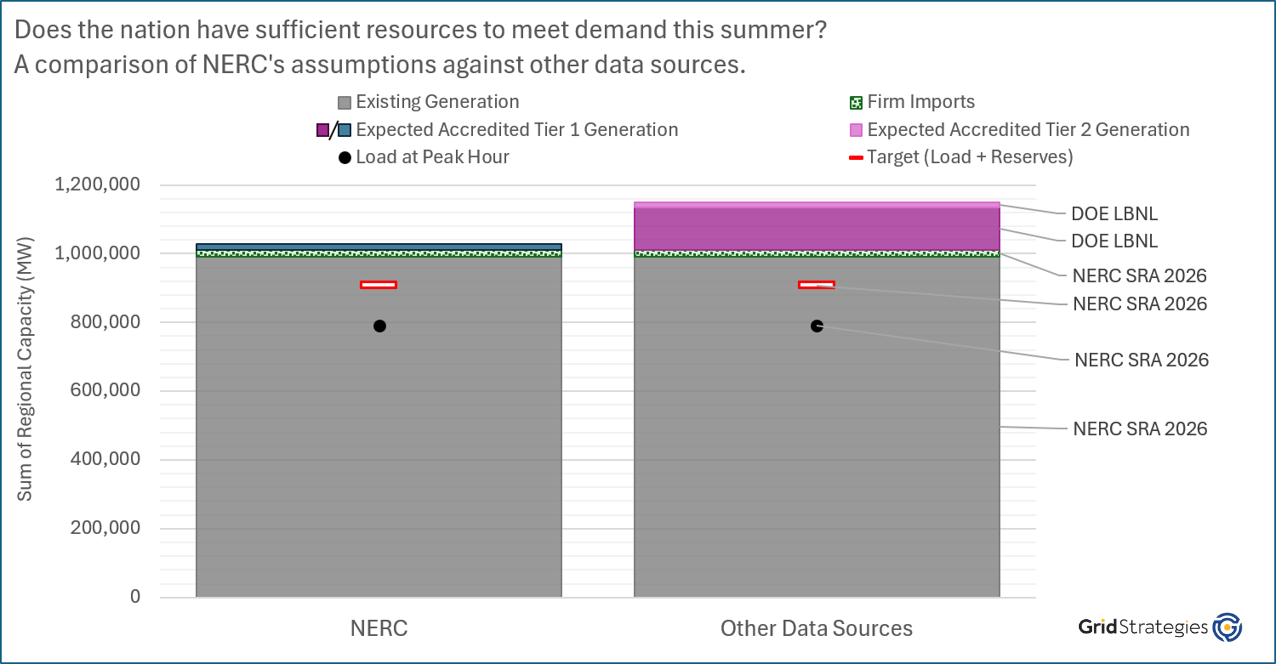 However, this latest analysis by Grid Strategies, which supplements NERC’s SRA with reputable queue data from the Lawrence Berkeley National Lab, suggests the two regions are also resource adequate under extreme conditions. This more comprehensive picture of likely-to-connect resources—plus non-firm imports from neighboring regions and operational mitigation strategies—enables all regions to have between 5% – 93% more reserves than their target reserve margin.
Intensifying extreme weather and accelerating load growth can create stress on our aging grid, necessitating smarter system planning and upgrades. But having a more comprehensive picture of regional reliability resources can help ensure that the most impactful tools—including operational mitigation procedures, interregional transmission ties, coordination with large loads, and speedy interconnection of new resources—are not overlooked.
For more analysis on this topic, see Review of NERC’s 2025 Long-Term Reliability Assessment.